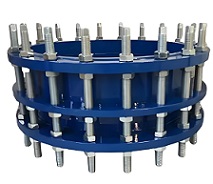
Dismantling Flange Joint

A specialized component designed for easy disassembly and reassembly of piping systems, providing a secure and leak-free connection while allowing for quick maintenance, repair, or replacement of equipment in industrial applications.

View Technical Specs
DIN Resilient Seated NRS Gate Valve

Product Overview

The Dismantling Flange Joint is an essential component in industrial piping systems, engineered to facilitate easy disassembly and reassembly of pipeline sections. It consists of two flange plates, a gasket, and a set of bolts and nuts, allowing for quick separation of connected pipes or equipment without cutting or welding.

Available in various sizes, pressure ratings, and materials (such as Stainless Steel, Carbon Steel, Ductile Iron, and PVC), the Dismantling Flange Joint can be customized to meet specific application requirements. It is commonly used in industries such as water and wastewater treatment, HVAC, chemical processing, power generation, and oil and gas.

With its robust design and easy installation, the Dismantling Flange Joint offers a cost-effective solution for connecting pipes of different specifications, reducing downtime during maintenance and ensuring reliable performance in demanding environments.

Key Features & Benefits

Easy Disassembly

Allows for quick and convenient separation of connected pipes or equipment, reducing downtime during maintenance, repair, or replacement.

Secure Connection

Provides a secure and leak-free connection, ensuring reliable performance and reducing the risk of system failures in industrial applications.

Misalignment Compensation

Compensates for minor misalignment between pipes, ensuring proper alignment and reducing stress on flanges and connections.

Durable Construction

Constructed with high-quality materials that offer excellent resistance to corrosion, chemicals, and environmental factors, ensuring long-term durability.

Versatile Compatibility

Compatible with pipes of different materials, sizes, or types, including plastic, steel, and cast iron, providing a flexible solution for various piping systems.

Customizable Options

Available in various sizes, pressure ratings, and materials, allowing for customization to meet specific application requirements.

Technical Specifications

Basic Parameters

Parameter Specification Range
Nominal Diameter (DN) DN15 ~ DN2000
Pressure Rating PN6, PN10, PN16, PN25, PN40, PN63
Operating Temperature -40°C ~ 250°C (Depending on material)
Applicable Media Water, Oil, Gas, Chemicals, Slurries
End Connection Flanged, Threaded, Socket Weld, Butt Weld

Material Specifications

Component Material Options Standards/Features
Flange Plates Stainless Steel (304, 316), Carbon Steel (A105), Ductile Iron (DI), PVC, CPVC High strength, corrosion resistance, customizable
Gasket EPDM, NBR, PTFE, Graphite, Rubber Excellent sealing performance, chemical resistance
Bolts & Nuts Stainless Steel (304, 316), Carbon Steel High tensile strength, corrosion resistance
End Connection Flanged (ANSI, DIN, BS, JIS), Threaded (NPT, BSP), Socket Weld, Butt Weld Easy installation and maintenance

Standards & Compliance

  • Design Standards: ANSI B16.5, DIN 2501, BS 4504, JIS B2220
  • Testing Standards: API 598, ISO 5208
  • Certifications: CE, ISO 9001, API 6D

Working Principle

The Dismantling Flange Joint operates on a simple mechanism to connect pipes of different materials, sizes, or types while allowing for easy disassembly:

  1. Connection: The Dismantling Flange Joint is installed between two pipes of different specifications, with one end connected to the first pipe and the other end connected to the second pipe.
  2. Sealing: A gasket is placed between the flange faces to ensure a leak-free connection, preventing fluid or gas from escaping.
  3. Alignment: The Dismantling Flange Joint compensates for minor misalignment between the pipes, ensuring proper alignment and reducing stress on the flanges and connections.
  4. Pressure Resistance: The robust construction of the Dismantling Flange Joint and the bolted connections provide excellent pressure resistance, ensuring reliable performance in high-pressure applications.
  5. Disassembly: To disassemble the joint, simply remove the bolts and nuts, separate the flange plates, and replace or repair the connected pipes or equipment as needed.

Application Areas

Water & Wastewater Treatment

Used in water and wastewater treatment plants to connect pipes of different materials, such as plastic and steel, ensuring a secure and leak-free connection while allowing for easy maintenance of pumps, valves, and other equipment.

HVAC Systems

Suitable for heating, ventilation, and air conditioning systems to connect pipes of different sizes or materials, ensuring efficient and reliable operation while allowing for quick replacement of filters, coils, and other components.

Chemical Processing

Used in chemical plants to connect pipes of different materials, such as steel and plastic, ensuring compatibility with corrosive fluids and gases while allowing for easy maintenance of reactors, tanks, and other equipment.

Power Generation

Suitable for power plants, including thermal, nuclear, and renewable energy facilities, to connect pipes of different sizes or materials, ensuring reliable performance in high-pressure applications while allowing for quick maintenance of turbines, boilers, and other equipment.

Oil & Gas

Designed for oil and gas applications, including upstream, midstream, and downstream operations, to connect pipes of different materials, such as steel and cast iron, while allowing for easy maintenance of pumps, compressors, and other equipment.

Industrial Manufacturing

Suitable for various manufacturing processes, including food and beverage, pharmaceuticals, and pulp and paper, to connect pipes of different sizes or materials, ensuring efficient and reliable operation while allowing for quick maintenance of mixers, blenders, and other equipment.

Installation & Maintenance

Installation Guidelines

  • Ensure the Dismantling Flange Joint is compatible with the pipes to be connected, including material, size, and pressure rating.
  • Clean the flange faces of both pipes to remove dirt, debris, and any surface irregularities.
  • Place the gasket between the flange faces, ensuring it is centered and properly aligned.
  • Align the Dismantling Flange Joint with the pipes and secure it using bolts and nuts, tightening them evenly to the recommended torque.
  • Check for leaks after installation by applying a pressure test or using a leak detection solution.

Maintenance Recommendations

  • Inspect the Dismantling Flange Joint regularly for signs of wear, corrosion, or leakage. Replace the joint if any damage is detected.
  • Check the tightness of the bolts and nuts periodically and retighten if necessary.
  • Replace the gasket if it becomes worn, damaged, or degraded, as this can lead to leaks.
  • Clean the flange faces and the Dismantling Flange Joint with a mild detergent and water to remove dirt and debris.
  • Keep records of maintenance activities and replacement parts for future reference.

Frequently Asked Questions (FAQ)

Q: What is the maximum pressure rating of a Dismantling Flange Joint?

A: Dismantling Flange Joints are available in pressure ratings up to PN63, making them suitable for high-pressure applications in various industries.

Q: Can Dismantling Flange Joints be used for corrosive applications?

A: Yes, Dismantling Flange Joints can be made of materials such as Stainless Steel (304, 316), PVC, and CPVC, which offer excellent resistance to corrosion and chemicals. The specific material should be selected based on the type of corrosive fluid or gas being handled.

Q: How much misalignment can a Dismantling Flange Joint compensate for?

A: The amount of misalignment compensation depends on the size and type of the Dismantling Flange Joint. Typically, Dismantling Flange Joints can compensate for minor misalignment of up to ±2mm to ±5mm.

Q: How long do Dismantling Flange Joints last?

A: The service life of a Dismantling Flange Joint depends on various factors, including the operating conditions, the type of fluid or gas being handled, and the quality of the installation. With proper installation and maintenance, Dismantling Flange Joints can last for 10 to 20 years or more.

Q: Can Dismantling Flange Joints be installed in any orientation?

A: Yes, Dismantling Flange Joints can be installed in any orientation, including horizontal, vertical, and diagonal. However, it is important to ensure that the joint is properly aligned and secured to prevent leaks.

Need Custom Solutions?

Our engineering team can customize Dismantling Flange Joints to meet your specific pressure, temperature, and media requirements. Contact us today for a personalized quote.

Contact Our Technical Team