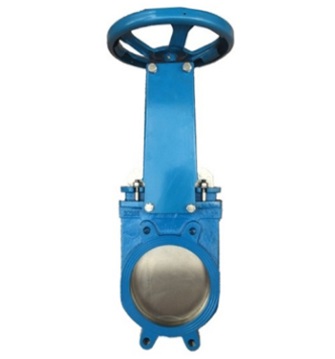
DIN Wafer Knife Gate Valve

German Standard (DIN) wafer knife gate valve designed for efficient shut-off of viscous, abrasive, and slurry media in industrial applications. Compliant with DIN 3202 F4 and DIN EN 1074-3 standards.

View Technical Specs
DIN Resilient Seated NRS Gate Valve

Product Overview

The DIN Wafer Knife Gate Valve is engineered to meet German Standards (DIN 3202 F4, DIN EN 1074-3) for industrial applications requiring efficient shut-off of viscous, abrasive, and slurry media. Featuring a sharp-edged knife gate and wafer-style body, this valve provides reliable sealing and minimal pressure drop in demanding environments.

Unlike traditional gate valves, the knife gate design incorporates a sharp-edged disc that cuts through media, making it ideal for applications involving sludge, pulp, paper stock, and other high-solids fluids. The wafer-style body allows for easy installation between flanges, saving space and reducing installation costs.

Constructed with ductile iron or stainless steel body and replaceable elastomer or metal seats, our DIN Wafer Knife Gate Valve offers excellent corrosion resistance and long service life—suitable for wastewater treatment, mining, pulp & paper, and chemical processing industries.

Key Features & Benefits

Sharp-Edged Knife Gate

Precision-ground knife edge cuts through viscous and fibrous media, preventing clogging and ensuring smooth operation.

Compact Wafer Design

Wafer-style body allows for space-saving installation between flanges, reducing overall footprint and installation costs.

DIN Standard Compliance

Fully compliant with DIN 3202 F4, DIN EN 1074-3, and API 609 standards for industrial valve applications.

Bi-Directional Sealing

Symmetrical design ensures equal performance in both flow directions, eliminating flow direction restrictions.

Easy Maintenance

Replaceable seats and packing allow for quick maintenance without removing the valve from the pipeline.

Abrasion Resistance

Hardened stainless steel gate and replaceable elastomer/metal seats ensure long service life in abrasive media applications.

Technical Specifications

Basic Parameters

Parameter Specification Range
Nominal Diameter (DN) DN50 ~ DN1200 (2" ~ 48")
Common Sizes: DN80, DN100, DN150, DN200, DN300, DN400
Nominal Pressure (PN) PN10, PN16 (10bar to 16bar)
Operating Temperature -20°C ~ 120°C (Elastomer Seats)
-20°C ~ 350°C (Metal Seats)
Applicable Media Slurry, Pulp, Paper Stock, Sewage, Wastewater, Chemical Slurries, Abrasive Fluids
Sealing Class EN 12266-1 Class A (Elastomer Seats), Class B (Metal Seats)

Material Specifications

Component Material Options Standards/Features
Valve Body Ductile Iron,Carbon Stell, Stainless Steel EN-GJS-400-15, ASTM A351 CF8/CF8M, Wafer Style with Flange Holes
Gate/Disc Stainless Steel AISI 304/316, Hardened to 55-60 HRC for Abrasion Resistance
Seats Elastomer, Metal NBR, EPDM, Viton® for Elastomer Seats; Stellite for Metal Seats
Stem Stainless Steel AISI 304/316, Rising or Non-Rising Design with PTFE Packing
Actuator Manual, Pneumatic, Electric Handwheel, Scotch Yoke Pneumatic Actuator, Electric Motor Actuator

Standards & Compliance

  • Design Standards: DIN 3202 F4, DIN EN 1074-3, API 609
  • Flange Standards: DIN 2501, DIN EN 1092-1, PN10/PN16
  • Testing Standards: DIN EN 12266-1, API 598, Hydrostatic and Leakage Testing
  • Certifications: CE, ATEX, ISO 9001

Working Principle

The DIN Wafer Knife Gate Valve controls fluid flow using a sharp-edged knife gate and wafer-style body mechanism:

  1. Opening Process: Rotating the handwheel or actuator raises the knife gate vertically, allowing media to flow through the full bore of the valve. The sharp edge cuts through any viscous or fibrous material, preventing clogging.
  2. Closing Process: Reverse rotation lowers the knife gate onto the seat, creating a tight seal. The sharp edge slices through any media in the pipeline, ensuring complete shut-off even with high-solids content.
  3. Sealing Assurance: The elastomer or metal seat compresses against the knife gate, providing reliable bi-directional sealing. The wafer-style body ensures even pressure distribution between flanges, maintaining seal integrity.

Application Areas

Wastewater Treatment

Sewage plants, sludge handling, and industrial wastewater processing.

Pulp & Paper

Paper stock, pulp slurry, and black liquor handling in paper mills.

Mining & Minerals

Ore slurry, tailings, and mineral processing applications.

Chemical Processing

Chemical slurries, viscous fluids, and aggressive media handling.

Installation & Maintenance

Installation Guidelines

  • Inspect valve for damage and confirm closed position before installation; clean pipeline flanges to remove debris.
  • Install between flanges using appropriate gaskets; ensure valve is centered and bolt holes align with flange holes.
  • Tighten flange bolts evenly in a crisscross pattern to avoid uneven pressure on the valve body.
  • Ensure actuator is mounted correctly and operating in the proper direction (clockwise to close, counterclockwise to open).
  • Conduct hydrostatic testing (1.5×PN) and leakage testing after installation before commissioning.

Maintenance Recommendations

  • Regularly inspect stem packing for leaks; adjust or replace packing as needed to maintain stem seal integrity.
  • Check knife gate and seat for signs of wear or damage; replace gate or seat if necessary to maintain sealing performance.
  • Lubricate stem threads and actuator components periodically with appropriate lubricant to ensure smooth operation.
  • For long-term shutdown, flush valve with clean water to remove any residual media and prevent hardening.
  • Use only manufacturer-recommended replacement parts to maintain performance and compliance with standards.

Frequently Asked Questions (FAQ)

Q: What is the difference between a knife gate valve and a standard gate valve?

A: A knife gate valve features a sharp-edged gate that cuts through viscous and fibrous media, making it ideal for slurry and high-solids applications. Standard gate valves have a flat gate and are better suited for clean fluids.

Q: Can wafer knife gate valves be installed in any orientation?

A: Yes, wafer knife gate valves can be installed in any orientation (horizontal or vertical) as long as the flow direction is correct and the valve is properly supported.

Q: What type of actuator is best for a DIN Wafer Knife Gate Valve?

A: The choice of actuator depends on the application. Manual handwheels are suitable for infrequent operation, while pneumatic or electric actuators are preferred for automated or remote operation.

Q: Are DIN Wafer Knife Gate Valves suitable for food-grade applications?

A: Yes, with appropriate material selections (stainless steel body and food-grade elastomer seats), DIN Wafer Knife Gate Valves can be used in food and beverage processing applications.

Need Custom Solutions?

Our engineering team can customize DIN Wafer Knife Gate Valves to meet your specific pressure, temperature, and media requirements. Contact us today for a personalized quote.

Contact Our Technical Team