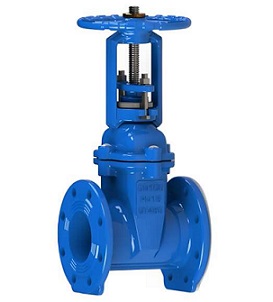
DIN Resilient Seated RS Gate Valve

High-performance rising stem gate valve compliant with DIN standards, engineered for reliable sealing and clear position indication in industrial and municipal applications.

View Technical Specs
DIN Resilient Seated NRS Gate Valve

Product Overview

The DIN Resilient Seated Rising Stem (RS) Gate Valve is a premium fluid control solution designed and manufactured to comply with German DIN standards (DIN 3352 Part 4, DIN 2501, etc.). Featuring a rising stem design and resilient seated sealing system, this valve delivers exceptional performance in applications where clear visual position indication and reliable leak-tight operation are critical.

Unlike non-rising stem gate valves, the RS design allows the stem to extend vertically when the valve is opened, providing a direct visual indication of the valve's position. This makes it ideal for applications where operator awareness of valve status is essential, such as critical process control and safety systems.

Constructed with ductile iron body and EPDM/NBR resilient seating, our DIN RS gate valve offers superior corrosion resistance, low operating torque, and bubble-tight sealing—suitable for water, wastewater, oil, and chemical mediums across municipal, industrial, and energy sectors.

Key Features & Benefits

Visual Position Indication

Rising stem design provides clear visual confirmation of valve position, enhancing operational safety and monitoring.

Bubble-Tight Sealing

Resilient EPDM/NBR seating provides zero-leakage performance, even with minor debris in the medium, ensuring reliable shut-off.

Corrosion Resistance

Epoxy-coated ductile iron body and stainless steel stem resist corrosion from harsh media and underground environments.

Low Operating Torque

Smooth resilient seat design reduces friction, enabling easy manual operation or compatibility with electric/pneumatic actuators.

Low Maintenance

Exposed stem design allows for easy inspection and maintenance; replaceable seat inserts reduce downtime and maintenance costs.

DIN Standard Compliance

Fully compliant with DIN 3352, DIN 2501, and EN standards, ensuring compatibility with European pipeline systems.

Technical Specifications

Basic Parameters

Parameter Specification Range
Nominal Diameter (DN) DN50 ~ DN1200 (2" ~ 48")
Common Sizes: DN50, DN65, DN80, DN100, DN150, DN200, DN300
Nominal Pressure (PN) PN10, PN16, PN25 (10bar, 16bar, 25bar)
Operating Temperature -10°C ~ 120°C (Custom high/low temp options available)
Applicable Media Water, Wastewater, Oil, Chemicals, Acid/Alkali Solutions, Saltwater
Sealing Class ANSI Class VI (Bubble-tight), EN 12266-1

Material Specifications

Component Material Options Standards/Features
Valve Body Ductile Iron, Cast Iron BS 2789 Gr.500/7 (Ductile Iron), BS 1452 Gr.220/250 (Cast Iron)
Disc Ductile Iron + Resilient Coating EPDM (Temperature-resistant), NBR (Oil-resistant)
Stem Stainless Steel, Brass DIN X20Cr13, SS 416 (Stainless Steel); CuZn39Pb3 (Brass)
Seals (Seat/O-Ring) EPDM, NBR Aging/chemical resistant, medium-specific customization
Fasteners Brass, Stainless Steel A2-70 BS 2874 CZ132 (Brass), Corrosion-resistant

Standards & Compliance

  • Design Standards: DIN 3352 Part 4, DIN 3202 F4/F5, MSS SP-70, AWWA C509/C515, BS 5163
  • Flange Standards: DIN 2501, DIN 2533, EN 593
  • Testing Standards: DIN 3230, BS 6755, API 598, GB 13927 (Hydrostatic, Shell, Leakage Testing)
  • Certifications: ISO 9001, CE, WRAS (Drinking Water), ACS

Working Principle

The DIN Resilient Seated RS Gate Valve controls fluid flow through the interaction between a resilient-coated disc and elastomeric seat, with an exposed rising stem mechanism:

  1. Opening Process: Rotating the handwheel or activating the actuator drives the stem to rotate around its axis. The stem's threaded connection moves the stem nut vertically, lifting the disc away from the resilient seat to open the fluid passage. The stem extends vertically, providing visual confirmation of the open position.
  2. Closing Process: Reverse rotation of the handwheel/actuator lowers the disc onto the resilient seat. The elastomeric seat deforms slightly under pressure, filling micro-gaps between the disc and body to create a hermetic seal and block fluid flow. The stem retracts vertically, indicating the closed position.
  3. Sealing Assurance: The deformable resilient seat absorbs minor debris in the medium, prevents disc-body impact damage, and maintains reliable sealing performance even with moderate pipeline pressure fluctuations.

Application Areas

Municipal Infrastructure

Drinking water networks, wastewater treatment plants, stormwater drainage systems.

Industrial Sector

Petrochemical fluid transfer, metallurgical cooling water systems, food/pharmaceutical clean fluid pipelines.

Energy & Environment

Oil/gas wellhead systems, gas transmission pipelines, landfill leachate transfer, irrigation systems.

Safety-Critical Systems

Fire protection systems, emergency shutdown systems, process control loops requiring visual position verification.

Installation & Maintenance

Installation Guidelines

  • Inspect valve for damage and confirm closed position before installation; clean pipeline connections to remove debris.
  • Install in any orientation (bi-directional sealing), ensure handwheel/actuator is accessible for operation and maintenance.
  • Tighten flange bolts evenly in a crisscross pattern to avoid uneven pressure on the sealing surface.
  • Ensure sufficient vertical clearance for the rising stem when the valve is fully open.
  • Conduct hydrostatic testing (1.5×PN) and leakage testing after installation before commissioning.

Maintenance Recommendations

  • Regularly inspect stem for signs of corrosion or damage; lubricate stem annually.
  • Check body coating for damage; repair epoxy coating promptly to prevent corrosion.
  • Replace resilient seat every 5-7 years (or as needed based on operating conditions).
  • For long-term shutdown, keep valve fully closed to prevent debris accumulation in the seat.
  • Use only manufacturer-recommended replacement parts to maintain performance and compliance.

Frequently Asked Questions (FAQ)

Q: What causes leakage after valve closure?

A: Common causes include worn/damaged resilient seats, disc jamming from debris, or uneven flange bolt tightening. Inspect bolt torque first; replace seat inserts if leakage persists.

Q: How to check valve position with RS design?

A: The rising stem provides direct visual confirmation of valve position—fully extended indicates open, fully retracted indicates closed. Electric models support remote monitoring via control systems.

Q: Can this valve handle high-temperature media?

A: Standard models operate up to 120°C. For temperatures exceeding 120°C, custom high-temperature seat materials (e.g., Viton) and body alloys are available—contact our technical team for solutions.

Q: What is the service life of the resilient seat?

A: Typical service life is 5-7 years for water applications; service life may shorten in aggressive chemical media (we recommend NBR/Viton seats for oil/chemical applications).

Need Custom Solutions?

Our engineering team can customize DIN Resilient Seated RS Gate Valves to meet your specific pressure, temperature, and media requirements. Contact us today for a personalized quote.

Contact Our Technical Team